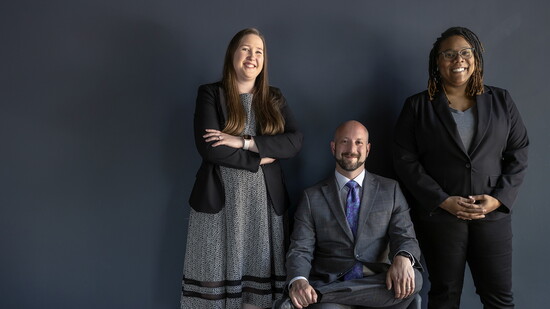
Most days, when the work's finally done, David Rudoi puts on his headphones, steps out onto the streets of downtown Royal Oak, and walks home. It's just him, the city, and whatever hip-hop he needs that evening to decompress.
It sounds simple enough. Until you understand what he's been carrying all day.
David is a criminal defense attorney. In fifteen years of practice, he's tried more cases than most attorneys handle in a career. He's even argued before the Michigan Supreme Court, multiple times - and won.
So even though he loves Royal Oak, the walking isn't really about the city. It's about the weight.
"These people are putting their lives in my hands," he says. "And often at the hardest moment they've ever experienced."
David grew up a skater, part of a crowd that had regular run-ins with a system that didn't seem particularly interested in fairness. He watched friends get, as he puts it, "totally screwed." The seed was planted early.
Then, during an internship while at law school at Michigan State, a conversation with a prosecutor settled something in him for good.
"I asked them: if I come work for your office, can I choose not to prosecute cases I don't think should be crimes? They said no. You prosecute what we tell you." He shakes his head. "I couldn't in good conscience do that."
I ask David if his job's about "getting someone off." He says that's rarely the story. The majority of his cases end in plea reductions: negotiated outcomes, where the goal is that someone comes out the other side with their life still intact.
"My job is to help people," he says. "A lot of times people make bad decisions. That doesn't make them bad people."
So David counsels them. He connects his clients to twelve-step programs, to mental health resources, to the treatment that should have come before the charge did. He explains, at length, exactly what's going to happen to them - because, as he's observed, "once they really understand how it's going to work," he says, "that often lessens their stress level fifty percent."
He also pushes hard on legal mechanics. He holds a specific view of what a defense attorney is actually for.
"There's a constitutional mandate that you're entitled to effective representation," he says. "Without lawyers, the government can just roll over you."
He's not being dramatic. He's being realistic.
The way David sees it, the system often sets people up to fail twice. The first time is the charge itself. The second is what happens after.
"If somebody ends up with a felony on their record," he explains, "they get out, they can't get a job, they can't get a house. What are you left with? You're left with reoffending."
That's why he fights for outcomes that leave people with a future. And why, when courts read the law in ways he believes were never intended, he appeals.
Most people who walk into David's office don't know the language, the sequence, or the stakes of what is happening to them. They've heard stories. They've Googled (too much). They've imagined the worst.
So he starts by making the unknown knowable.
"They don't understand how this process works," he says. "Once they really understand what's going on, how it's going to all work, and know that they got the right guy to look out for their interests, that really often calms them down quite a bit."
Fear grows in the dark. By making explanation part of the defense, David's demonstrating his understanding not just of law, but of the human psyche.
In talking clients through the road ahead, he helps them see where accountability can exist without personal destruction. And when the legal part's over, David has the harder conversations too: what needs to change, what support they need, how to make sure this doesn't become the beginning of a pattern.
"One really important thing is teaching them how to comply with the law," he says. "Helping people find the resources they need to deal with their personal demons, so they don't get back."
As one example: to hedge against blind spots, he keeps two attorneys on every file. He fine-tooth-combs everything: he is, by his own description, the most prepared person in every courtroom he walks into. "Does that mean working eighty hours a week and missing time with my kids sometimes? Yes," he admits. "But people's lives are in my hands."
There's the weight again. But the responsibility is clearly part of who he is. Maybe that's why, when I ask him what gives him hope, he pauses, and then grins. "Criminal defense attorneys like me," he says.
It gives me hope too.
Before he and his clients part ways - when the paperwork is done, the verdict is in, the case is closed - David always has one last thing he tells them.
"I hope you never have to call me again," he says. "Except maybe to invite me to your wedding."
He has a pretty good record with that too.
So if that day ever comes for you - when the machine's already in motion and you need someone to step in front of it - David Rudoi is ready.
Rudoi Law is on Main Street in Royal Oak. Call (248) 914-9387 or visit rudoilaw.com
"A lot of times people make bad decisions. That doesn't make them bad people. But without lawyers, the government can just roll over you. My job is to help people, people who are putting their lives in my hands. And often at the hardest moment they've ever experienced."