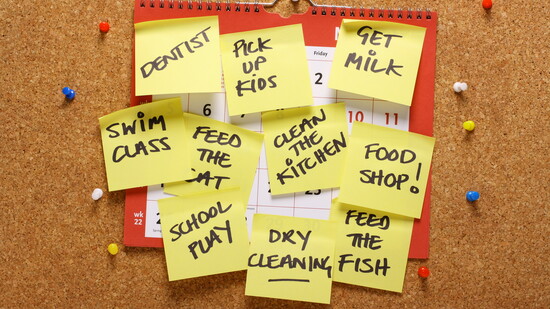
It's 8:00 a.m., and you've already wrestled everyone into their clothes, changed a diaper or two, packed lunches, signed a permission slip, filled and refilled water bottles, made breakfast, emptied the dishwasher, scheduled a doctor’s appointment, remembered that your child needs a poster board for tomorrow's project, and mentally reviewed what's for dinner. Oh wait, it’s also pajama day at school. You then got everyone redressed. And that's before you've even had a cup of coffee!
For many parents, exhaustion doesn't come from the tasks themselves. It comes from carrying the responsibility of remembering, planning, anticipating, and managing everything that keeps a family running.
This is what psychologists often refer to as the mental load of parenting.
The mental load is the invisible cognitive and emotional labor that happens behind the scenes every day. It isn't just about what needs to be done today; it's the constant responsibility of anticipating needs, planning ahead, and managing countless details that keep a family running. Parents often find themselves carrying responsibility for events, emotions and needs that haven't even arrived yet.
In the spirit of full transparency, I requested an extension for this article. Not because I didn't understand the topic, but because I was living it. Like many parents, I was juggling professional responsibilities, a family of five, an aging parent, schedules, commitments and the countless invisible tasks that don't make it onto a calendar. As a psychologist, I know the signs of mental overload. As a parent, I'm not exempt from them.
Even those who understand the mental load professionally are still human enough to experience it personally.
So, there I was attempting to write about the mental load of parenting, experiencing it firsthand. My own mental bandwidth had become stretched thin. That experience reminded me of something I say day in and day out in my practice: recognition is the first step of change. Rather than pushing through, I chose to pause, reassess and give myself the grace I often encourage others to do.
It was a powerful reminder that thriving isn't about doing more. It is often about recognizing when we're carrying too much and making intentional choices that create space for what matters most.
One reason the mental load feels so relentless is that many of us have absorbed the message that every moment should be productive. We live in a culture that celebrates efficiency, achievement and optimization, but when our worth becomes tied to what we accomplish, we leave little room for recovery. The human mind was designed for periods of effort and periods of recovery. Yet many of us spend far more time producing than restoring.
As parents, we often find ourselves treating downtime as something that must be earned rather than as something essential. We schedule, plan, organize and maximize. Even activities that were once restorative have become another opportunity for productivity. We no longer simply enjoy a cup of coffee; we schedule a coffee meeting. We don't just take a walk; we listen to a podcast. The result is that our minds rarely receive the opportunity to rest, be present or reset.
What if we allowed ourselves to believe that not everything has to be productive to be valuable?
A conversation with a friend, an afternoon at the park, watching your child play, or enjoying a cup of coffee without an agenda may not produce anything measurable. Yet these moments restore us, strengthen our relationships, and remind us why we work so hard in the first place.
Rest isn't something we earn after productivity; it's what makes sustainable productivity possible.
The goal is not to eliminate responsibility or perfectly balance every demand. Parenting will always require planning, sacrifice and care. But when we become more aware of the mental load we are carrying, we can begin to make intentional choices, have honest conversations and implement systems that reduce the need to rely solely on memory and mental energy.
Shared calendars, predictable routines and clearly defined responsibilities may seem simple, but they can significantly lighten the cognitive burden of daily life. When we stop carrying everything alone, we create more space for presence, connection, and joy. The very experiences our children will remember long after the to-do lists have been forgotten.
SIDEBAR
Teresa Christian, Psy.D. is a Clinical Psychologist licensed by the California Board of Psychology. She has specialized training and experience in short-term, solution-focused, evidence-based therapies, integrated behavioral health and clinical health psychology. Visit Mainstreetpsychology.com
"We no longer simply enjoy a cup of coffee; we schedule a coffee meeting. We don't just take a walk; we listen to a podcast. The result is that our minds rarely receive the opportunity to rest, be present or reset."