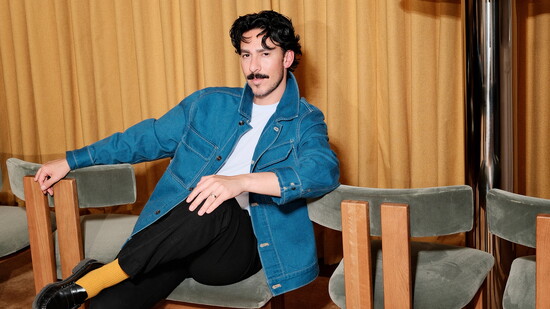
The Creative
JT Morin | Senior Designer, Photographer + Content Creator
1. How do you balance creativity with the pressure to monetize everything?
By being delusional enough to believe that what you're creating is of the highest value. Not everyone is going to value your work, and that's okay! If everyone valued what you were creating, your work would be diluted. When you're in such alignment with the creative direction and the value, you're free to work without that pressure.
2. What part of your work feels most personal to you?
In the creative world there's all these terms like "creative asset" and "deliverables", "allocations". Who cares! The best feeling is when you can hold something that you did, something that wasn't in existence before you came along to create it.
3. In a world full of trends, how do you protect originality?
The biggest thing I've learned from being in a creative business for so many years is that there actually aren't any original ideas, and that isn't a new notion, that's been said for years. There are authentic and inauthentic ideas, and I think that's where you go when you want to protect something original. What feels authentic to me, to who I am, where I come from and the experiences I've had so far.
-
The Game Changer
Landen Arnold | Designer + Founder of Poplar Point
1. What industry rule did you intentionally ignore when building your business?
Traditionally, many businesses begin online and later expand into a brick-and-mortar space. We chose to approach it differently by opening our physical store first and then building our online presence.
Starting with a storefront allowed us to really understand Nashville — the people, their style, what they’re drawn to, and what they’re actually looking for. Instead of assuming what the city needed, we were able to listen first. That helped us curate products and build a brand that feels genuinely connected to the city and the community around us.
2. What’s something people misunderstood about your vision early on?
People often misunderstood our commitment to slow fashion, sustainability, and stewardship. In an industry driven by fast fashion and constantly chasing trends, we’ve intentionally chosen a more curated and thoughtful approach.
It’s incredibly difficult as a small business to stay true to those values, especially when faster and cheaper options dominate the market. But those principles are at the core of Poplar Point. Because of that, we’ve been intentional about partnering with brands that share the same vision and standards we do. We want to build a business and carry products that we can genuinely stand behind.
3. Where do you think entrepreneurship is headed in the next 5 years?
I see a lot of similarities between entrepreneurship and farming or manual labor, especially when it comes to mom and pop shops. There’s a level of risk, grit, and personal investment that comes with building something from the ground up.
Right now, the U.S. in general has made it incredibly difficult for people to go out on their own and put their life savings on the line to start a business. I do worry about this generation and the next, and whether they’ll feel willing or able to take those kinds of risks.
At the same time, I’m really excited by what I’m seeing from younger designers, makers, and business owners who are breaking out of the mold that was created before us. The next generation is recognizing the importance of returning to more organic, ethical, and community centered ways of building businesses.
-
The Risk Taker
Keegan Fioravanti | Founder + CEO, Lotus Building Group
1. What's the biggest risk you've taken in your career, and was it worth it?
The most recent project on Long Avenue stands out, as it was the largest personal capital investment I'd ever put into a single build. There was real weight to that decision, but I believed in the vision and trusted what we could deliver on that lot. The whole team working on this was incredible. Watching it come together exactly as I'd hoped and then sell within the first 24 hours on the market made every bit of that risk worth it.
2. How do you know when a risk is worth betting on vs. walking away from?
For me, it comes down to trusting my instincts and being willing to bet on my own work ethic. I've learned that if I'm fully committed to seeing something through, I'll find a way to make it happen no matter what. That trust in myself has been built from my years of experience, through years of running a business and learning from both the wins and the harder lessons.
3. Do you think entrepreneurship naturally requires a certain level of fearlessness?
I do think there's a certain wiring that lends itself to this path. A lot of entrepreneurs I know grew up navigating some level of chaos, which teaches you early how to stay flexible when the goal posts move, and in this business they're always moving, often because I'm the one moving them. It takes a willingness to embrace change rather than resist it, and I think some of that just has to live in you.
-
The Builder
Tyler King | Founder & Owner, Tastify
1. What was the moment you realized working for someone else would never fulfill you?
I think it was less of a single moment and more a growing realization. I worked in restaurants and corporate food service for years, and while I learned a lot, I always felt boxed in creatively. Hospitality is deeply personal to me — I care about the details, the feeling people leave with, the atmosphere around food — and I realized I wanted the freedom to build something where every part of the experience reflected that vision. Eventually, the idea of building my own thing became less scary than the idea of spending my life building someone else’s.
2. What did the early version of success look like to you — and how has that definition changed?
Early on, success looked like growth, recognition, packed calendars, and proving I could build a real business from nothing. I was very focused on momentum and validation. Now, success looks a lot more balanced. It’s building something sustainable, creating opportunities for other people, protecting my health and relationships, and building a company that people genuinely trust. I still care deeply about ambition and growth, but I’ve learned that success without peace or fulfillment catches up to you eventually.
3. What sacrifice did entrepreneurship demand from you that nobody warned you about?
The emotional weight of it. People talk about the long hours and financial risk, but they don’t talk enough about the constant mental load. When you own a business, it follows you everywhere — your mind is always solving problems, protecting the company, thinking about employees, clients, cash flow, reputation, all of it. There’s also a loneliness to leadership at times. But I think entrepreneurship forces you to grow as a person in ways very few things can. It exposes your weaknesses quickly, but it also teaches resilience, humility, and perspective.
-
The Influencer
Steve Luther, Principal | Chief Strategist & Advisor, CHORD Real Estate
1. Why is community important in the work you do?
Community is at the heart of everything we do. Real estate involves homes and investments, but at its core, it’s about people and relationships. My faith has shaped how I view business — not just as a way to make a living, but as an opportunity to serve others and impact lives.
What energizes me most is seeing the impact we can have on individuals and families. Whether it’s helping someone through a difficult transition, opening doors to opportunities they didn’t think were possible, or being present during meaningful life moments, there’s nothing more rewarding than knowing you made a difference.
We’re passionate about giving back through organizations like the Rally Foundation for Childhood Cancer Research, Frontline Ministries, and the American Red Cross, but beyond organizations, it’s the personal connection that matters most. I believe businesses should contribute to the communities that support them and leave people better than they found them.
2. How do you define leadership outside of money or status?
Leadership is about integrity, consistency, and how you treat people when there’s nothing to gain. Doing the right thing — especially when no one is watching — is foundational to true leadership.
It’s earned through trust and shown in how you serve your team, support clients, mentor others, and handle difficult situations with honesty and humility. Some of the most impactful leaders are quietly creating opportunities for others, encouraging people behind the scenes, and setting an example through daily actions.
If people around you feel valued, supported, and inspired to grow because of your influence, that’s real leadership.
3. What legacy are you wanting to leave behind through your work?
I hope the legacy we leave through CHORD Real Estate extends far beyond transactions or sales. I want our company to positively impact the communities we serve, the clients who trust us, the vendors and partners we work with, our staff, and the agents we collaborate with.
More importantly, I hope my children see through my life what truly matters. I want them to understand hard work, gratitude, humility, strong relationships, and kindness. I hope they learn that success isn’t measured by money alone, but by the difference you make in others’ lives and how you carry yourself along the journey.
-
The Reinventor
Van Hohe | CEO, CHORD Real Estate
1. How do you balance honoring your past while still embracing change and growth?
After nearly 30 years in the music business, it permeates who I am at most levels (…and not just the hair!) It shows up in everything I do in real estate, maybe because it’s my frame of reference, like coaches speaking in sports terms. As much as I loved what I did, my role in Nashville real estate through CHORD allows me to be creative and community-focused while still being home for dinner with my family.
2. What inspired you to take the risk of starting over professionally?
During a major economic downturn, I found myself at a crossroads. The music industry was shifting with digital downloads, a 65% drop in unit sales, and reduced A&R and tour budgets. At the same time, my wife fell ill with something doctors took nearly a year to diagnose. I thought I might lose her, but once she received the right treatment, she recovered—and we soon learned we were expecting our second child. With so many life-changing events in one year, I decided to come off the road to be a full-time husband and father. That meant reinventing myself.
3. What misconceptions do people have about starting over later in life or after success?
People think you have to have it all figured out. I believe life, relationships, and careers are God-ordained. My greatest successes have been others-focused “God-things” I could never have orchestrated myself. There’s effort involved, but when you put others first, great things unfold.
That’s true in real estate too. I credit my partners, Steve & Ashley Luther, for connecting my entertainment background with real estate. We take a concierge approach, having helped design or stage over 1,000 homes and built a boutique brokerage. You don’t need it all figured out—just great people, hard work, and helping others win.
[3rd page for Keegan]
“Entrepreneurship requires a willingness to embrace change rather than resist it.”
-
[6th page for Van]
“There’s effort involved, but when you put others first, great things unfold.”