Wellness Begins at Home: Designing Spaces That Support How You Live
Luxury once announced itself loudly. Ornate moldings, layered finishes and recognizable brands signaled success before a word was spoken. Today, luxury has softened. It is less about what is seen and more about what is felt. Calm instead of clutter. Ease instead of excess. Homes designed to support daily life rather than compete with it.
For George Markoutsas, CEO of Ablaze Design Group, this shift is not a trend. It is a natural response to how people live now.
“People are busy. Life is loud,” Markoutsas says. “When your home is visually noisy and full of friction, it adds stress. The goal today is calm. Less clutter. Less distraction. Spaces that work for you instead of demanding your attention.”
I caught up with Markoutsas the only way his schedule would allow: on the road. He and his wife, Ava Markoutsas, co-owner and chief marketing officer of Ablaze, were driving west to a materials meeting, hands-free and in motion, moving between commitments in a calendar packed by demand. The conversation about wellness and ease unfolded against the quiet urgency of a firm operating at full speed.
Based on the North Shore of Chicago, Ablaze Design Group has built its reputation designing and renovating luxury homes throughout the Midwest. While the firm is known for award-winning kitchens and baths, its work is increasingly shaped by a broader philosophy that centers on wellness, quiet luxury and technology that disappears into daily life.
Designing Wellness Into Everyday Living
Markoutsas recently earned certification in Universal Design, a discipline focused on creating spaces that are usable by people of all ages and abilities. For him, the connection between universal design and wellness is direct.
“Wellness is not just about where someone is today,” he says. “It’s about every phase of their life and the people they may bring into their home.”
That thinking informs design decisions that are often subtle but deeply impactful. Light switches placed at intuitive heights. Appliances that are easy to operate for both children and older adults. Countertops designed at varying heights. Floor plans that allow rooms to evolve as needs change over time.
Universal design also encourages homeowners to think beyond immediate needs. Entryways without unnecessary steps, wider circulation paths and flexible rooms that can later become a first-floor primary suite are examples of choices that support long-term livability without sacrificing aesthetics.
“There is real value in designing a home that can adapt,” Markoutsas says. “People want to make memories in a space they love for a long time.”
That adaptability has become increasingly appealing in the North Shore market, where many homeowners view renovations as long-term investments rather than short-term upgrades.
Quiet Luxury and the Rise of Ease
As wellness becomes a guiding principle, it intersects naturally with another defining shift in luxury design: the rise of quiet luxury. "Luxury used to be about what you could show," Markoutsas explains. "Now it’s about convenience."
Quiet luxury moves away from heavy ornamentation and toward restraint, craftsmanship and thoughtful planning. Fewer visual distractions. Cleaner lines. Storage solutions that reduce clutter. Spaces that feel composed even when filled with people and activity.
"When a house is already busy visually, and then you add people, schedules and daily life, it creates chaos," he says. "Quiet luxury is about toning that down so the home feels calm and supportive."
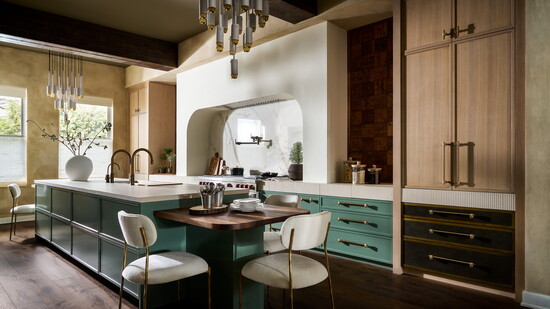
Convenience and the ability to move through a space intuitively plays a central role in that experience. Kitchens are no longer designed as single-user spaces but as lifestyle hubs that support cooking, homework, entertaining and gathering. Baths are designed to feel restorative rather than purely functional.
At Ablaze, kitchens and baths anchor many projects because of their outsized influence on daily routines, with circulation, storage and functionality designed to support multiple users throughout the day.
"It is not a one person kitchen anymore," Markoutsas says. "It is where life happens."
Invisible Technology, Thoughtfully Integrated
Technology, when used well, enhances wellness. When used poorly, it adds friction. Ablaze’s approach favors systems that feel intuitive and unobtrusive.
"The best automation doesn’t call attention to itself," Markoutsas says. "It should feel effortless."
Through partnerships with established home automation platforms, Ablaze integrates lighting, shading and sound so they work together seamlessly. With a single command or preset, homeowners can dim lights, lower shades and adjust music without moving through multiple rooms or devices.
Lighting plays a particularly important role in wellness-driven design. Circadian lighting systems adjust light temperature throughout the day to align with natural sleep and wake cycles, reducing disruption at night while supporting alertness during the day.
"You know how jarring it feels to turn on a bright light in the middle of the night," Markoutsas says. "That can disrupt your sleep cycle. Lighting that responds more gently makes a real difference."
Sound is treated with similar restraint. Integrated audio systems allow music to enhance a space without visible speakers or visual clutter, contributing to atmosphere without distraction.
Biophilic design principles further reinforce the wellness experience. Color palettes inspired by nature. Blues and greens that promote calm. The incorporation of plant life and, in some kitchens, the ability to grow herbs or greens indoors.
“People are intrinsically connected to nature,” Markoutsas says. “When you bring those elements into the home, it changes how a space feels.”
Recognition Rooted in Design Excellence
Ablaze’s philosophy-driven approach has earned significant recognition within the design world. In 2025 alone, the firm earned multiple honors from leading industry organizations, including the American Society of Interior Designers, the National Association of the Remodeling Industry, the National Kitchen and Bath Association and Modern Luxury. Its projects have received Design Excellence Awards, Remodeler of the Year honors and inclusion in Modern Luxury’s Design 9, a curated list recognizing standout residential work.
The firm was also nominated for several high-profile distinctions, including international recognition through the Créateurs Design Awards in Paris and multiple Luxe RED Awards nominations.
While accolades are not the goal, they reflect growing appreciation for design that prioritizes experience, longevity and restraint.
For Markoutsas, the true measure of success remains personal.
“We want homes to support how people actually live,” he says. “Spaces that help you take care of yourself, connect with others and feel at ease at the end of the day.”
In a world that rarely slows down, that may be the quietest and most meaningful luxury of all. More at ablazedesigngroup.com.