WILD BY NATURE
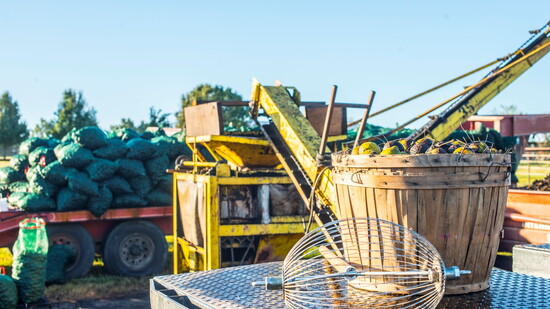
Vermont has maple syrup. Northern Michigan has cherries. Kentucky has bourbon. The Ozarks have black walnuts. Each fall, American black walnuts fall in backyards, pastures and along fence rows throughout southwest Missouri. Unlike the mild English walnuts grown in commercial orchards, the American black walnut is native to North America and harvested largely from the wild. Its flavor is bold, earthy and unmistakable. “American black walnuts grow right outside your door, and most people walk right past them every fall without realizing what they have,” says Jacob Basecke, president and COO of Hammons Black Walnuts and the fourth generation of his family in the business. Basecke says more wild black walnuts are hand harvested in Greene County than anywhere else in the world. The company began in 1946 and processes much of the nation’s supply at its shelling plant in Stockton, working with more than 150 buying stations across 12 states. The harvest depends on residents who gather naturally fallen nuts and bring them to local buying stations, continuing a distinctly Ozarks tradition one bucket at a time.
JOIN THE HARVEST
The 2026 buying season runs October 1 through November 16. Gather nuts after they fall naturally and bring them in with green hulls. Wear gloves because the hulls stain hands and clothing. Hammons has announced an opening price of $14 per 100 pounds after hulling. Springfield-area residents may sell walnuts at two locations operated by Clint Harlan: the Missouri State University Darr Agricultural Center, 2401 S. Kansas Expressway, and 4749 S. Farm Road 223 in Rogersville. Mark Luttrell also operates a location at 7369 W. Farm Road 140. Residents who do not want payment may drop off walnuts at Lone Pine Recycling Center, 3020 S. Lone Pine Ave. Hours vary by location. Visit black-walnuts.com for current directions, contact information and schedules before loading the car. Even a few buckets matter. Together, these contributions create the community harvest that moves from Missouri yards to kitchens across the country.
TASTE THE OZARKS
Black walnuts do not disappear into a recipe. Their bold, earthy flavor brings depth to sweet and savory dishes. Banana bread is an easy introduction. The nuts stand up to ripe fruit and warm spice, while their intensity pairs with dark chocolate in brownies. In a roasted beet salad, they balance peppery arugula, tangy goat cheese and honey vinaigrette. Finely chopped black walnuts also make a flavorful crust for salmon or chicken. For something unexpected, toast the nuts and process them with a pinch of salt and a touch of honey into black walnut butter for toast or oatmeal. A scoop of cherry ice cream topped with chopped black walnuts offers a simple contrast between bright fruit and the nut’s earthy character. Hammons offers tested recipes for Black Walnut Banana Bread and Ozarks Pasta with Black Walnuts, Spinach and Blue Goat Cheese at black-walnuts.com. Behind every dish is a chain of people that begins close to home. Families, farmers, retirees and neighbors gather the nuts. Local stations hull and purchase them. The Stockton plant sorts, cracks and packages them for cooks around the country.
“This is not a factory farmed ingredient shipped in from somewhere else,” Basecke says. “There is a remarkable chain of community behind every bag.”
This October, the walnuts underfoot are more than a seasonal nuisance. They are part of Missouri’s food heritage, a source of extra income and an invitation to join a tradition that gives the Ozarks a distinctive place in American food.