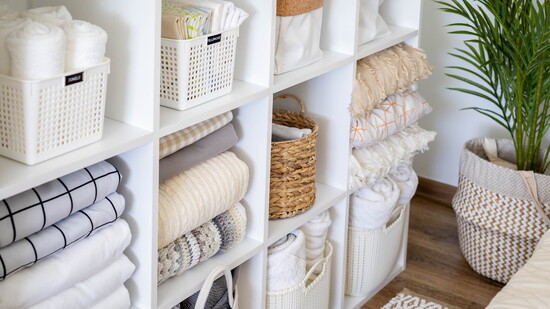
Bee Organized has made a business out of creating customized systems for Northwest Arkansas homes because the task of organization can be overwhelming and ineffective if not executed well. By identifying the cause of your clutter and adapting to your daily routines, we design processes to help you clear through the mess and activate systems for a more streamlined household.
Letting Go
It’s not organization that most people struggle with; it’s the emotion of letting things go. Every item in our home tells a story. Sometimes we keep things because they remind us of someone we love. Other times it’s guilt over the expense or the belief we might need it someday.
One of the biggest mindset shifts we teach clients is that our homes should support the life we’re living today. Instead of asking, “Could I ever use this?” ask, “Does this support my current lifestyle?” Would I buy this again today? Is this item earning the space it occupies?
When we release the guilt attached to possessions, organization becomes much easier.
Habits Hindering Organization
Organization isn’t a one-day project; it’s built through daily habits. The greatest culprits contributing to your clutter likely include: delayed decisions, shopping before taking inventory, lack of place, and over-organization.
Delayed Decisions: This is the “I’ll deal with it later” mentality. One delayed task after another turns into months and piles. Every unopened package or random countertop item is simply a postponed decision.
Shopping Before Taking Inventory: Organization saves far more than space. Research suggests people spend a surprising amount of time each year looking for misplaced belongings. Many families own multiples simply because they can’t find what they already have. We’ve had clients with sunscreen, tape measure, and shampoo collections. A well-designed system gives that time back.
No Dedicated Place: If something doesn’t have a permanent place, it naturally migrates. Keys, backpacks, shoes, charging cords. When everything has a home, mornings become smoother, grocery shopping becomes easier, and families spend less time searching for lost items.
Over-Organizing: Many people buy containers before they’ve decluttered. We recommend you purge first, then organize. Containers organize what you choose to keep, not what you should have already let go.
Systems Designed for The Space
Children’s Closet: Keeping up with kids can be chaotic, especially when it comes to growth spurts, hobbies and sports, and seasonal wardrobes. We recommend creating simple systems using bins labeled for: current size, next size up, keepsakes, hand-me-downs, and seasonal clothing. By doing this, we’re maximizing space and simplifying life by rotating bins instead of entire closets. The same principle applies to holiday décor, sporting equipment, and outdoor gear.
Bathroom: Bathrooms become chaotic because, without a system, these small products can multiply quickly. We like to create dedicated zones to help our clients achieve clutter-free cabinets. This includes: hair products, makeup, skin care, medicine, and nail supplies. When daily-routine products have their place, within reach, duplicates become obvious, expired products get removed, and countertops stay clean.
Laundry Room: The laundry room is one of the hardest-working spaces in a home. Simple upgrades to streamline this space include labeled baskets for each family member, a lost sock container, folding space, and vertical storage for supplies. Laundry should be a process, not a pile.
Beautiful systems encourage lasting habits.
At Bee Organized, we believe organization is about creating homes that support the people who live in them. Whether we’re guiding someone through decades of cherished belongings or helping a growing family simplify busy mornings, our goal is always the same: To create customized systems that are beautiful, functional, and simple enough to maintain for years to come.
"Organization isn’t about putting things away; It’s about knowing where they belong."