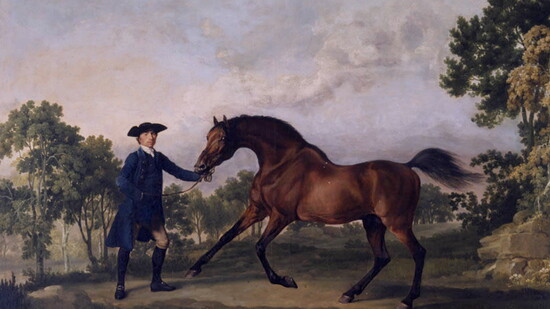
During the American Revolutionary War, George Washington was traveling on horseback when he encountered a group of soldiers struggling to move a heavy timber. A corporal stood nearby shouting instructions but made no effort to help. When Washington asked why he did not lend a hand, the corporal reportedly replied that he was “a corporal” and therefore above such labor.
Washington dismounted without another word, joined the soldiers, and helped lift the timber into place. Only afterward did he reveal who he was, adding that if the corporal ever needed assistance again, he should call for his commander-in-chief.
Authority expressed through action—rather than announcement—has a way of revealing character. It is precisely this kind of quiet substance that becomes harder to recognize in a present age that prefers its virtues declared loudly and often.
And yet this story about Washington and the corporal endures not because it is grand, but because it is simple. Simple, and rare.
The Noise of the Present Age
In an age that rewards visibility, in which the loudest voices travel the farthest, the significance of character has been replaced, in many corners of society, by spectacle: followers, views, engagement.
But there was a time when a man’s reputation traveled slowly through the quiet testimony of others. His name moved through rooms long before he arrived, carried by the simple assurance that he is a good man to deal with.
His internal architecture would be considered by such people rare.
Not rare like a collector’s object or a vintage watch locked in a glass case, novel solely due to the scarcity of their kind. But rare in the older sense of the word—something uncommon because it possesses a quality that most things do not.
A rare book. A rare mind. A rare man.
Here is the sort of rare that cannot be manufactured or mass-produced. It appears singly, slowly, and seemingly without effort over the arc of a long, intentional life.
But a few key traits can help to reveal them in a crowd:
I. Integrity When No One Is Watching
Most people behave well when they are being observed. Social pressure has always had a civilizing effect. Laws, customs and expectations guide behavior toward acceptable norms. But the true measure of character appears in the quiet moments where observation disappears. A rare person does the right thing even when it is inconvenient, unprofitable, or unnoticed.
He pays the debt no one would remember. He keeps the promise no one could enforce. He tells the truth when a small lie would smooth the path forward.
This kind of integrity does not originate from fear of punishment. It originates from a private code. And that code becomes visible over time.
Business partners learn it first. Friends notice it next. Eventually, even casual acquaintances begin to understand that certain things simply do not happen in the orbit of such a man.
He does not cheat. He does not betray confidence. He does not trade short-term advantage for long-term reputation. And so, his reputation is built in whispers.
This quiet consistency creates something increasingly unusual in modern life: trust, accumulated. Like sediment in a riverbed, trust in this kind of rare man builds layer by layer until it becomes the foundation upon which his entire network of relationships is constructed.
II. The Discipline of Independent Thought
Another hallmark of this rare man lies in intellectual independence.
Most people inherit their opinions the same way they inherit furniture. They come prearranged by the environment in which they were raised: family beliefs, regional attitudes, professional cultures. These influences shape the majority of human thinking. There is nothing inherently wrong with this; social cohesion requires some degree of shared assumption. But rare individuals do something different.
They examine their beliefs. They question them. They test ideas against experience and evidence rather than adopting them out of habit.
This requires a certain courage; independent thought can create friction. It sometimes separates a man from the comfort of the herd. But it also sharpens judgment.
Such individuals read widely. They listen carefully. They remain willing to revise their conclusions when confronted with stronger arguments. Intellectual humility and intellectual strength appear together, a subtle combination to the observer.
And a man who understands these strengths— and his own limitations—has little need to perform. He does not inflate his accomplishments, nor does he diminish them. He simply knows who he is. This creates a curious effect: others often attribute greater authority to him than he claims. His restraint signals substance. His calm signals competence.
In rooms full of self-promotion, the quietly confident individual becomes unusually compelling.
III. Emotional Governance
Another trait lies in emotional self-control. Modern culture encourages expression. It celebrates the dramatic release of feeling as a form of authenticity. There is value in emotional honesty, of course. Suppressing reality serves no one. Yet there is a difference between acknowledging emotion and being governed by it. Rare individuals maintain command of their internal weather.
Anger visits them, but it does not take up residence. Frustration appears, but it does not dictate their decisions. Success arrives, but it does not inflate their sense of self. They possess a steady center.
Psychologists sometimes describe this capacity through the lens of delayed gratification, the ability to favor long-term benefit over immediate satisfaction. Yet the principle extends beyond simple patience. It touches every dimension of life.
The rare person does not sacrifice tomorrow for the pleasure of today. He considers the arc of consequence before acting. Over time, this restraint produces a form of quiet power; in conversation, such individuals possess a certain gravity. They do not dominate discussions, but when they speak, others tend to listen.
Their words carry weight because they originate from thought rather than impulse. The man who governs himself cannot easily be manipulated by others.
IV. Reliability
Rare individuals understand the profound power of consistency. If they say they will arrive at eight, they arrive at eight. If they commit to completing a task, the task is completed. No elaborate explanation accompanies the result. No parade of excuses follows failure. Things simply get done. This reliability becomes a form of social currency.
People begin to build plans around such individuals. Businesses depend on them. Families lean on them. The rare man becomes, in essence, a structural beam within the architecture of other people’s lives. Remove him, and things begin to wobble.
V. Solitude
But the rare man is also, reliably, one to retreat when needed. He is comfortable with solitude.
This does not mean isolation or social withdrawal. Rather, it reflects the ability to be alone without discomfort.
Many people fear silence. They fill every quiet moment with noise, conversation or digital stimulation. The rare person understands the value of empty space, that solitude allows reflection. He knows that it allows ideas to develop without interruption. It allows a man to examine his own motivations, to correct his course, and to strengthen his internal compass.
Some of the most consequential decisions in life occur far from crowds. They occur during quiet walks, long drives, late evenings spent thinking through possibilities. The rare individual welcomes those moments. He recognizes them as workshops for the mind.
The Formation of Rarity
The paradox of rarity lies in its accessibility. Every quality described here is available to anyone willing to cultivate it. Yet few people do. Why?
They require discipline. Day after day, choice after choice, a man gradually shapes his character.
He keeps the promise. He reads the difficult book. He tells the uncomfortable truth. He resists the easy shortcut.
But such consistency is uncomfortable. Such integrity occasionally costs money. Independent thought can create disagreement. Emotional restraint requires effort. Depth demands time.
And these are not fashionable sacrifices in a culture that celebrates immediacy.
So, rarity persists. Not because such cultivated character is impossible. But because it is inconvenient.
In our noisy age, the rare individual remains something of a paradox: unassuming, unadvertised, and yet, unmistakable.
The steady hands in moments of crisis. The principled voices in times of confusion. The reliable builders of institutions that endure beyond a single generation. And when you meet such a rarity of a person, you know it immediately. Not because they announce themselves—quite the opposite.
They tend to be the quiet ones in the room—the men of noble bearing who, without announcement, dismount from their horses to lighten the burden of their fellow man.
There was a time when a man’s reputation traveled slowly through the quiet testimony of others.
People begin to build plans around such individuals. Businesses depend on them. Families lean on them. The rare man becomes, in essence, a structural beam within the architecture of other people’s lives.