Expert advice from Shrum’s Roofing Company | shrumsroofing.com | (615) 675-4489
In Gallatin, March isn’t just a welcome warm-up; it’s a critical transition period for your home. While the ice and snow fade away, your roof may still be carrying damage from winter’s freeze-thaw cycle, just as spring storms, straight-line winds, and heavy rain arrive. According to the experts at Shrum’s Roofing, this seasonal handoff is when small, hidden problems can quickly escalate into costly emergencies.
Here’s how homeowners can perform a smart post-winter check and prepare their roof for storm season before April weather puts it to the test.
Step 1: Look for the Damage You Can’t See
After winter, most homeowners scan for missing shingles, but that’s rarely the first warning sign in Middle Tennessee.
On a sunny March afternoon, stand back in your yard with binoculars and look along the shingle rows. Instead of obvious damage, you’re looking for shadows.
A red flag is a tiny, straight horizontal shadow beneath the edge of a shingle that doesn’t match the rest of the row. This often indicates a lifted nail caused by repeated freeze-thaw cycles. Even slight movement can break the shingle’s sealant strip.
Once that seal is compromised, spring winds can grab the loose shingle like a sail, tearing it off or allowing wind-driven rain to reach the wood decking below. If caught early, this is often a minor repair. Left unaddressed, it can become a major storm-season failure.
Step 2: Inspect the Gutter Line, Not Just the Shingles
One of the most overlooked post-ice warning signs is gutter pull.
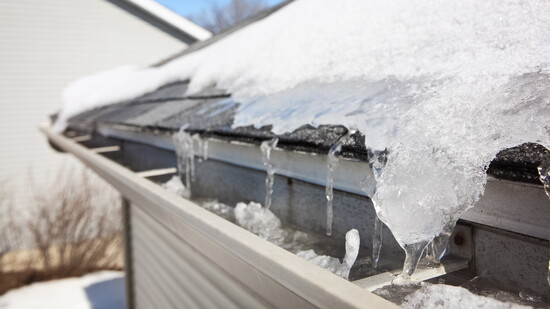
Stand at the corner of your house and look down the length of the gutters. If you see a gap between the gutter and the fascia board, or metal flashing peeking out, winter ice weight may have pulled the system loose.
Ice buildup, especially in gutters clogged with debris, can weigh hundreds of pounds. When gutters pull away, spring rain runs behind them instead of into them, soaking fascia boards and rotting the starter edge of the roof deck. In March, this is usually a straightforward fix. By May, it can mean replacing the fascia and installing new gutters.
Step 3: Know What to Do the Moment a Leak Appears
If a spring storm reveals a leak, your priority isn’t fixing the roof; it’s stopping interior damage.
First, contain the water. Place a bucket under the drip and reduce splash damage by placing a towel inside. For high ceilings, tape a string near the leak and let it hang into the bucket so water travels down it cleanly.
Second, relieve trapped ceiling water. If you see a bulge or bubble forming, carefully poke a small hole in the center. This controlled release prevents soaked drywall from collapsing and causing widespread damage.
Third, check for gutter backups. Spring pollen and seed pods can quickly clog gutters. If you see water spilling over the gutter edge, safely clearing a downspout from the ground may stop the leak immediately.
Never climb on a roof during a storm. Wet shingles are extremely dangerous.
Step 4: Understand Why Wind Ratings Aren’t the Whole Story
Many shingles are rated for 110-130 mph winds, but those ratings depend on proper installation.
Improper nail placement, too few nails per shingle, or nails driven too high can significantly weaken wind resistance. Shingles installed during cold weather are also vulnerable because their thermal seal requires warm sunshine to activate. Until that happens, even moderate March winds can cause damage.
Pay close attention to roof edges, ridges, and rake lines. These are the first areas wind attacks. Proper starter strips and metal drip edges create a locked perimeter that helps the roof hold strong during Middle Tennessee’s unpredictable spring storms.
The Bottom Line
March is your opportunity to catch winter’s hidden damage before spring weather exploits it. A careful ground-level inspection and timely professional attention can prevent costly repairs and protect your home when storm season arrives.
Shrum’s Roofing puts it simply: if it looks small now, fix it now.