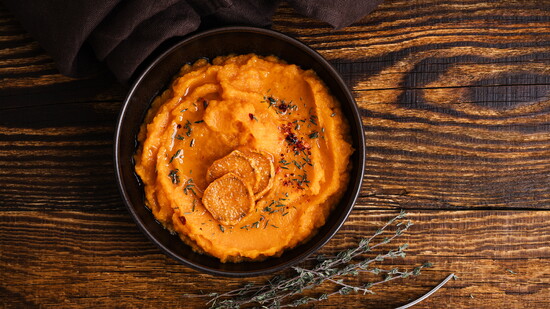
With the arrival of fall, sweet potatoes are about to have their annual moment. So this felt like the perfect time to show just how versatile they can be.
Sweet potatoes have a bit of an identity problem. They’re not potatoes. They’re not yams. Yet somehow, they’ve spent centuries being mistaken for both.
They belong to the morning glory family and are unrelated to both potatoes and true yams. Domesticated in South America as many as 3,000 years ago, sweet potatoes were carried across the Pacific by Polynesians and across the Atlantic by Europeans, eventually becoming part of culinary traditions around the world.
That journey, from Andean fields to Polynesian canoes to African markets and American holiday tables, has made the sweet potato one of the world’s most culturally interconnected foods.
There’s a reason it stuck around.
Sweet potatoes are nutrient-dense, with high levels of fiber, vitamins A and C, and antioxidants, while being essentially fat-free. They’re economical, easy to transport and simple to store. They’re also incredibly versatile. Roast them. Boil them. Ferment them. Fry them. Bake them.
They work just as well in a savory dish as they do in dessert.
While naturally sweet, they also have deep, earthy notes. Butter, cream or olive oil pulls them toward savory. Sugar and spice take them toward dessert. Their texture is forgiving and their flavor is flexible, which is why Southern cooks use them in pies, casseroles, biscuits and savory sides.
That versatility is exactly why I love working with sweet potato puree.
It can be lush and sweet like pie filling, or savory and elegant, like something I would top with seared scallops or braised short ribs. The magic is in the technique and seasoning.
Start with one good puree, then decide which direction you want to take it.
Sweet Potato Puree
This is your foundation. It’s silky, rich and deeply flavored because it starts with roasted sweet potatoes, not boiled ones.
Ingredients
-
2 large sweet potatoes
-
2 to 3 tablespoons butter
-
1/3 cup milk, cream or coconut milk
-
Pinch of salt
Method
Roast whole sweet potatoes at 400 F until completely soft and caramelized inside.
Scoop out the flesh and place it in a blender or food processor. Add the butter and a splash of milk or cream.
Puree until silky, adding more liquid as needed. Season with salt.
Sweet Version
Add:
-
Brown sugar or maple syrup
-
Cinnamon
-
Nutmeg
-
Vanilla
-
Splash of bourbon, optional but very Southern
The result is warm, spiced and custardy. Use it as a dessert base or filling for pastries, or serve it alongside your Thanksgiving favorites.
Savory Version
Add:
-
Extra butter or olive oil
-
Another pinch of salt
-
Pinch of white pepper
-
Splash of chicken or vegetable stock
-
Optional flavor boosters such as miso, smoked paprika, garlic or thyme
This version is silky, earthy and lightly sweet, but balanced with fat and salt. It makes an ideal base for meat, fish and vegetarian entrees. You can also swirl it into soups or serve it instead of traditional mashed potatoes.
Want to take it one step further? Turn it into a gratin.
Sweet Potato Gratin
Ingredients
-
2 cups sweet potato puree
-
2 large sweet potatoes, thinly sliced
-
1 cup heavy cream or half-and-half
-
1/2 cup Gruyere or Parmesan, grated
-
2 tablespoons unsalted butter, melted
-
2 garlic cloves, minced
-
1/2 teaspoon salt
-
1/4 teaspoon black pepper
-
1/4 teaspoon nutmeg, optional
-
2 tablespoons fresh thyme or chives, chopped
Instructions
Butter a baking dish and add the nutmeg to the puree.
Thinly slice the remaining sweet potatoes into 1/8-inch rounds.
Spread a thin layer of puree in the baking dish. Add a layer of sweet potato slices, then spoon more puree over them. Repeat until the dish is full.
Sprinkle Gruyere or Parmesan over the top.
Bake at 375 F for 40 to 45 minutes, until bubbling and golden. Let rest for 10 minutes before serving.
One final warning: Whether you go sweet or savory, don’t substitute yams.
Their earthy, starchy flavor bears little resemblance to sweet potatoes. Grocery stores too often label sweet potatoes as yams and vice versa, so don’t be fooled.
Sweet potatoes have thin, smooth copper, red or purple skin with sweet, moist flesh. True yams have thicker, bark-like or scaly skin that is usually dark brown or gray, along with dry, starchy flesh.
About Chef David Burke
Brooklyn-born chef and restaurateur David Burke, who was raised and continues to live in New Jersey, is known for playful, precision-driven modern American cooking and elevated comfort classics. His restaurants span New Jersey and beyond, including Red Horse by David Burke in Rumson.
To learn more, explore his restaurants, or get in touch, visit chefdavidburke.com and follow his culinary adventures on Instagram @chefdavidburke.