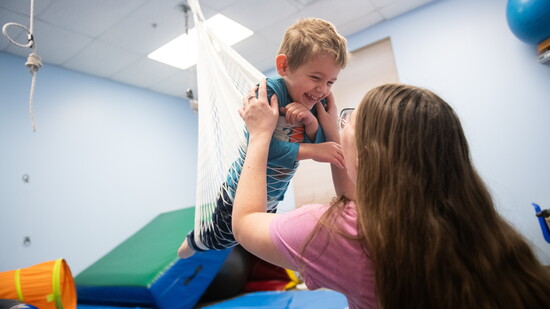
For many families, the first hints that something feels “off” can be hard to describe. A child who avoids certain clothes, melts down during transitions, or seems constantly in motion may not simply be “misbehaving.” At Kids Can Do in Mokena, those moments are often understood through the lens of sensory integration — the process that shapes how children experience and respond to the world around them.
“Sensory integration is the brain’s ability to take in sensory information from the body and environment and then process, organize, and interpret that information so that a person can respond appropriately and effectively,” explains Marijo Kleinfelder, occupational therapist, OT department manager, and an owner of Kids Can Do. This includes not only sight and touch, but also vestibular, proprioceptive, and interoceptive systems that guide movement, body awareness, and internal cues such as hunger or fatigue. “Sensory integration is a key component in building the foundation for motor skills, emotional regulation, and interaction with the people and objects in our world,” she adds.
Early signs of sensory challenges vary widely, which can leave parents unsure of what they’re seeing. “Truthfully, the list is long and varies from one person to the next,” Marijo says, noting sensitivities to clothing textures, intense meltdowns, limited diets, clumsiness, or strong reactions to sound and touch. Spotting these patterns is often the first step toward understanding a child’s unique sensory needs.
At Kids Can Do, the evaluation process is designed to feel supportive. “Initial evaluation typically begins with interviewing the parents prior to the session,” she shares. Play-based activities and standardized testing allow therapists to see how a child processes sensory input in a natural, low-pressure setting.
A core pillar of therapy is helping families reframe behavior through education. “Parent coaching is an integral part of the therapy process,” she says. Caregivers learn to identify sensory signals and respond with proactive strategies, shifting from reacting to meltdowns to anticipating and supporting a child’s needs.
Inside the clinic, therapy often looks like play. “Therapy from a sensory integration perspective is very fun,” Marijo notes. Swings, climbing equipment, foam pits, crash pillows, weighted blankets, trampolines, and tactile bins help children explore sensory input in a controlled, engaging way. Both individual rooms and a large therapy gym allow therapists to tailor sessions based on each child’s comfort level and energy needs.
Supporting sensory health has benefits that reach far beyond the clinic. “Every child needs sensory input to support their emotional regulation and sense of well-being,” she says, noting its impact on focus, coordination, and social development. “Children need a variety of sensory input every day in the same way we need a balanced diet to meet our nutritional needs.”
Home support reinforces progress. Marijo highlights strategies like visual schedules, predictable routines, and tailored activities that help children feel secure even in unexpected situations.
For families just beginning their journey, reassurance matters. “We assure them that they are not alone and the struggles they have been feeling are real,” she says. “It is a journey and will have highs and lows, but even the ‘lows’ will be higher and less extreme over time.”
Kids Can Do also hosts Ark, a monthly parent support group offering education and encouragement for families navigating sensory processing disorder, that serves as a reminder to families they never have to walk this path alone.
Sensory integration therapy is highly effective in helping the brain learn to respond and adapt to sensory input in a better way for an improved daily life experience.