Wabi-sabi is a Japanese design principle and style rooted in embracing simplicity,
natural imperfections and holistic living. This style is finding and creating organic beauty in your home's environment. The wabi-sabi principles of embracing timeless beauty is a way that design and style can increase the amount of well-being you experience in your daily life. Let's break it down into the two unique parts: the two words behind this style of design. We will also get a closer look at how to create this aesthetic. The 'wabi' side and then the 'sabi' side. 'Wabi' is represented through a simple, unpretentious and natural beauty. Some design principles that go along with the wabi side are; simplicity, quietness, modesty, naturalness and understatement. It is the opposite of showy and the kind of beauty you can feel in a quiet, comfortable room. It's also about contentment, being self-contained and finding richness in simply being present. 'Sabi' is about honoring the beauty that results from age and gentle use. The belief that things become more beautiful as they age. Represented by a natural patina, tarnishing, cracks in pottery and weathered stone. It's the idea that time itself is an artist. Where wabi is inner stillness and simplicity, sabi is the outer evidence of impermanence, showing us that beauty can deepen as objects age. Examples of this can be a weathered patina and the oxidation of wear. The story held in an object over time. Sabi finds beauty in longevity, history and soul. Together, wabi-sabi honors what is real, organic, raw and deeply honest. Taking a holistic look at your space and objects you use on a daily basis with these principles in mind can create more wellness in your space. These principals help us to slow down, embrace everyday moments and appreciate quality objects as they age. How our living spaces are designed and the pieces we choose to fill them with affects our overall quality of life and well-being. It is important when considering design and wellness, to be intentional with the moments and spaces you create, because we truly are creating our own personal environment. When I think of wabi-sabi design, I think that one of the best shops in town that represents this style is Okenhem-Modern Goods on Main Street. Okenhem the word, is Swedish and translates to "desert home". Okenhem offers very beautiful objects and well designed furniture pieces that are meant to last. The items in this shop also are made to help you embrace everyday moments. Minimalism and stillness are aspects that are highlighted and experienced in the style of both wabi-sabi and Okenhem. I wanted to take a look at some of the products you can purchase at Okenehm because it is where I would first think to shop if I was looking to create the feeling of wabi-sabi in a space. The furniture and products available there are high quality and made in sustainable and natural ways. Okenhem carries Scandinavian home goods that are modern and are built to last for many lifetimes which overlaps with wabi-sabi principles in that they both embrace clean lines, longevity, quality of products, minimalism and purposeful living. Here are some highlights of products and furnishings to give you an idea of how you can achieve embracing this style and gain the resulting effect of wabi-sabi in your own home. One of the ways to cultivate wabi-sabi is by embracing what is homemade and natural. In this vignette we are highlighting organic natural shapes. The chair is called the Tearoom Club Chair and it has a very organic shape with a natural curve and boucle type fabric that is cozy and natural. The shape of this chair is an gentle curve and sort of hugs you as you sit in it. These are the types of elements you incorporate in your home to truly begin a wabi-sabi aesthetic. This basket here on the ground is called The Bola Braided Floor basket and it's a strong representation of wabi-sabi with its imperfect shape and woven material. The pillow that is pictured is made from beautiful, very natural materials. You can feel it when you touch it and it gives a fun feel to the set up of the space. The blanket is super soft and cozy to cuddle with and it will keep you warm in the cold winter months. The lamp adds a nice touch of wabi-sabi in its design. We like to think of light as a strong way to create mood and ambiance. It is nice to not use overhead light but use lamps to create a soft and warm feel in a room. Another way to be intentional with your space and design is to think about how to create time
and stillness in your downtime at home. In this vignette we featured music as way to beautifully
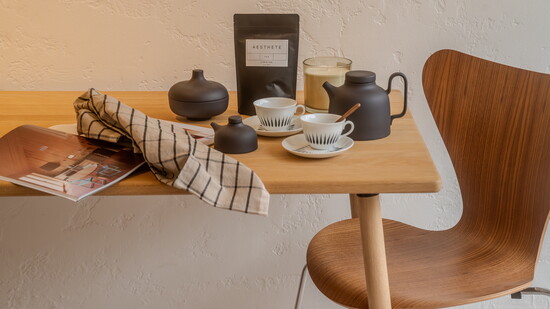
enjoy your everyday life. Create a nice mood and ambiance in your home with this beautiful speaker. We also showcased a single candle setting because it is in moments like these that we can create stillness and embrace calming everyday moments. Watching a candle burn and or flicker is a simple way we can connect back to nature and ourselves. The vase is a neat organic shape and adds a type of 'wabi' texture. Adding natural shapes is a way we are reminded and can connect to the organic, natural world we live in. Add books as layers to create moments where quiet and stillness can be very helpful while looking at beautiful color and art. The organic shapes and materials are discreet ways we are reminded of the natural elements of wabi- sabi. Being intentional with every day moments through your dishes, vases and herbal teas is another way to embrace nourishment of the soul in your daily life. In wabi-sabi design, we want to celebrate everyday necessities like drinking healthy water with more intention. This can help us to have more meaning and appreciate this simple but powerful daily act. The ritual of drinking tea and using natural linens is also a way to create connection and beauty in the most simple moments of our life. The sincerity of enjoying an artful vase that we fill with flowers or natural twigs we picked outside or grew is a beautiful celebration of daily moments and the natural world around us. The chair and table we selected here represent organic materials and shapes that keep things interesting and beautiful while also bringing peace and calm to the space. In the end, by creating our personal spaces with items that feel good and are designed in a way that is intentional and human, we welcome a space where simplicity, presence, ritual and the beauty of time bring your body and spirit back into balance. This article is written by Meg Nelson. Meg is a seasoned interior designer who embraces the
uniqueness of her clients, encouraging and guiding them to design in a more holistic,
authentic way in their spaces. You can contact Meg at ionedesignstudio.com.
How our living spaces are designed and the pieces we choose to fill them with affects our overall quality of life and well-being.