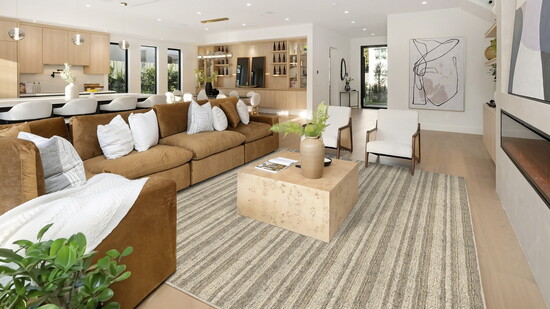
Walk into a thoughtfully designed California home, and you'll quickly notice something beyond the furniture or finishes. The walls tell a story, reflecting the homeowner's personality while quietly bringing every room together and transforming the house into a home.
Southern California's signature design style favors light-filled interiors, natural materials, and seamless transitions between indoor and outdoor living. Because architecture often features expansive windows, soaring ceilings, and open floor plans, wall décor should complement those spaces rather than compete with them.
Today's California Casual aesthetic embraces simplicity with warmth. Heavy, ornate frames have largely given way to light oak, natural maple, slim white frames, and clean black accents. Oversized artwork has also become the preferred choice over collections of smaller pieces, allowing walls to breathe while creating a strong focal point.
Texture plays an equally important role. Instead of bright, highly contrasting artwork, designers increasingly favor plaster-inspired pieces, subtle abstract canvases, layered textiles, and organic earth tones that echo California's beaches, mountains, and desert landscapes. Soft shades of sand, clay, sage, terracotta, and warm ivory create a timeless backdrop that complements nearly every decorating style.
California homeowners should also consider one important design challenge: sunshine. Abundant natural light makes interiors feel bright and welcoming, but prolonged exposure to ultraviolet rays can quickly fade artwork. Valuable originals, delicate watercolors, and family heirlooms should be kept away from direct southern or western sunlight whenever possible. In brighter spaces, UV-protective glass, museum-grade acrylic, metal prints, and high-quality photography produced with UV-resistant inks provide lasting beauty without sacrificing durability.
As indoor-outdoor living continues to define California architecture, wall art is expanding beyond interior rooms. Covered patios, loggias, and outdoor entertaining spaces increasingly feature weather-resistant metal sculptures, outdoor-rated canvas prints, ceramic pieces, and decorative wall panels that extend a home's personality beyond its interior walls. Treating these outdoor living areas as true rooms creates a seamless connection between inside and out.
Choosing artwork also depends on how each room is used. Living rooms benefit from large statement pieces, expansive mirrors, or thoughtfully curated gallery walls that encourage conversation. Bedrooms call for calming landscapes, abstract watercolors, or personal photography that promote relaxation. Dining rooms can showcase elegant still lifes or oversized mirrors that reflect natural light and evening ambiance.
In kitchens, decorative ceramics, culinary artwork, and carefully placed framed prints add personality while remaining safely away from cooking areas. Bathrooms benefit from moisture-resistant photography, botanical prints, and simple geometric artwork, while home offices are ideal spaces for inspirational pieces that stimulate creativity without creating visual distraction.
Even hallways and entryways deserve attention. These often-overlooked spaces become memorable with vertical gallery arrangements, elongated mirrors, or carefully displayed family photography that welcomes guests while establishing the home's overall design style.
Proper placement is just as important as selecting the artwork itself. Designers frequently recommend centering artwork at approximately eye level while following the classic two-thirds rule—choosing artwork that spans roughly two-thirds the width of the furniture beneath it. This simple guideline creates visual balance whether displaying one dramatic statement piece or a carefully arranged gallery wall.
Negative space is equally important. Designers often resist filling every wall, allowing architecture, natural light, and carefully selected furnishings to share the spotlight. This restrained approach creates a more sophisticated look while giving each piece of artwork greater visual impact and purpose.
Ultimately, the most successful wall art reflects the people who live there. Trends may influence colors, textures, and materials, but thoughtfully selected artwork tells a home's unique story. When proportion, placement, and personal style come together, every wall becomes an opportunity to create beauty that feels both intentional and timeless.
Beautiful wall art doesn't simply decorate a room; it shapes atmosphere, reflects personality, and brings every space together.