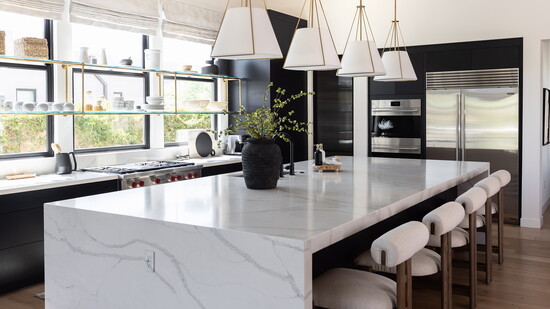
As we look toward 2026, the most successful new builds are the ones designed with longevity in mind. Homeowners are thinking less about what looks good on day one and more about how their homes will support daily life, health, and flexibility over the next decade. As a licensed contractor and interior designer, I consistently see the best results when design and construction decisions are made together from the start.
One of the biggest must-haves is a highly intentional kitchen and living room layout. Open concept isn’t going away, but it is evolving in a big way. Clients want spaces that feel connected. That means kitchens that remain open to living areas, paired with thoughtful zoning. Islands are being sized for real use and walkways are wider. Prep zones are separated from entertaining areas so the kitchen can still function when the house is full. In living rooms, we design for furniture placement first and architecture second. Built-ins, fireplaces, and ceiling details are aligned with how people actually sit, gather, and move through the space.
Wellness-driven design is also becoming an expectation rather than a luxury add-on. Walk-in showers with no thresholds are now standard in primary suites, not only for accessibility, but for everyday comfort and ease of use. Homeowners are choosing larger showers with multiple shower heads, built-in benches, and natural stone or textured tile that delivers a spa-like feel. Freestanding tubs are still popular, but only when space allows them to be used comfortably.
Clients are also thinking more seriously about aging in place, which requires planning well before it feels necessary. We’re seeing extra bedrooms repurposed into dedicated wellness spaces that can evolve over time. These rooms may include saunas, red light therapy, cold plunges, or simple zones for stretching and recovery. The key is planning the infrastructure early so these spaces feel integrated, not retrofitted when the time comes to needing them, and thinking in advance about things like your bathtub. You may like the idea of a freestanding tub, but as you age, it’s often not practical to get in and out of it easily.
Lighting plays a major role in wellness as well. We’re designing layered lighting plans that support circadian rhythms, with softer ambient lighting in the evening and brighter task lighting where precision is needed. Large windows and sliding doors remain a priority, but with better control shading and drapery to manage heat and glare, especially in desert climates.
Another must-have is flexibility. Bonus rooms are being designed to shift easily between guest space, home office, or wellness room as needs change. That means accounting for acoustics, lighting, and storage from the beginning. It is far more cost-effective and seamless to build flexibility into the structure than to retrofit later.
What homeowners often get wrong is chasing features without considering how they’ll function day to day and over the years. The best homes aren’t overloaded with technology or trends. They are grounded in smart layouts, durable materials, and wellness features that actually improve daily life. When these decisions are made early, the home feels intentional, timeless, and deeply livable.
Lauren Lerner is the founder and principal designer of Living with Lolo (LivingWithLolo.com), a Scottsdale-based luxury interior design and construction firm.
Open concept isn’t going away, but it is evolving in a big way.
What homeowners often get wrong is chasing features without considering how they’ll function day to day and over the years.