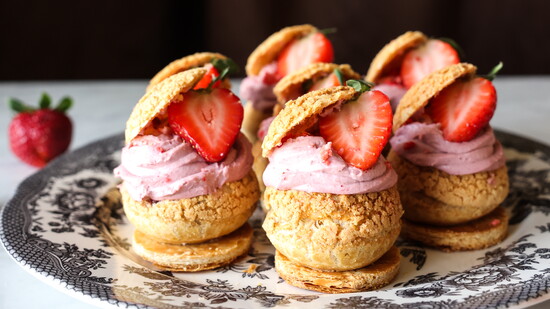
Birdie James built a career baking wedding cakes so sculptural and striking they felt closer to art than dessert. Over the years, her work earned both national and international recognition, with designs shared and admired far beyond Kansas City.
“My own journey has been shaped by curiosity, creativity, and experience,” says James. “From childhood art classes to architectural photography trips in Kansas City and Chicago, from studying painters and textile patterns to learning the craft of wedding cakes from my beloved aunt, each experience enriched my perspective and shaped how I work. These influences ultimately led me to culinary school, and later, to launching my own wedding cake business. It was this combination of artistic foundation that inspired me to design the architecturally unique wedding cakes that have been liked and shared around the world.”
That artistic foundation became the lens through which she eventually viewed pastry, less as a recipe-driven task and more as a creative discipline.
“Every creative field, whether that be architecture, textiles, or the pastry arts, demands dedication, patience, and a willingness to learn. Baking is no different. To become a true baker or pastry artist, you must master the fundamentals, study styles of other chefs, and immerse yourself in a wide range of techniques and ingredients from around the world.”
Success didn’t arrive overnight. James embraced every stage starting with the experimentation, the breakthroughs, and the inevitable setbacks, understanding that each challenge refined her skills and sharpened her vision. That mindset carried her through years of growth and recognition, and ultimately gave her the confidence to move on to new chapters when the time felt right.
Though she no longer bakes professionally, the lessons from that chapter continue to shape how she approaches life and creativity. Baking taught her to trust her instincts, take risks, and pursue what she wants with intention. It’s a philosophy she still carries forward, and one she’s eager to share with home bakers looking to elevate their own creations.
For those baking at home, James believes excellence begins with fundamentals. Precision matters more than many people realize, and one of the simplest upgrades a baker can make is swapping measuring cups for a kitchen scale.
“Bake by weight. Use a kitchen scale for consistent results. Baking relies on precision, and measuring ingredients by volume, such as scooping flour, can lead to variations from one measurement to the next.”
Equally important is understanding your oven. Many baking frustrations stem not from recipes, but from uneven or inaccurate oven temperatures.
“Ensure your oven is level by placing a level on the oven rack and checking both diagonals. A level oven helps promote even baking. It’s equally important to verify the temperature. Use an oven thermometer to confirm accuracy and identify any hot spots. This will help you anticipate areas where your baked goods may brown more quickly and allow you to adjust by rotating or repositioning your pan as needed. If your oven runs hot, compensate by lowering the temperature or reducing the baking time.”
James also encourages bakers to think beyond the clock. Paying attention to sensory cues can be far more reliable than baking times.
“Baking times should be treated as guidelines rather than strict rules. Use sensory cues to determine doneness: aroma is often the first indicator, followed by visual signs, such as golden edges.”
Learning to trust these cues builds confidence and leads to better outcomes over time, especially if baking becomes more than just a hobby.
“To anyone considering baking as a career, embrace every moment of the journey. Be curious. Experiment boldly. Celebrate your discoveries, learn from your mistakes, and never stop growing. Every cake you design, every flavor you perfect, and every challenge you overcome will shape you into the baker and the artist you aspire to be.”
Birdie James’s cakes may no longer be stacked in tiers at wedding receptions, but her influence remains in the lessons she shares, the inspiration she offers, and the reminder that creativity, when nurtured with patience and purpose, can take you further than you ever imagined.
Gooseberry and Elderflower Cake
Vanilla chiffon sponge
All ingredients should be at room temperature before proceeding.
85g egg yolks
34g sugar (1)
34g neutral oil
45g milk
1 tsp elderflower cordial/syrup
86g all-purpose flour
1g salt
138g egg whites
60g sugar (2)
1. Preheat the oven to 325°F (160°C) and prepare 2 5 or 6-inch round cake pans by lining the bottom with parchment paper. Note: Do NOT spray the sides of the cake pan.
2. In a bowl, whisk egg yolks, sugar (1), oil, milk, and elderflower cordial until smooth and pale.
3. Sift in the flour and fold until just combined.
4. In another bowl, you are going to make a meringue. Whip the egg whites to soft peaks, gradually adding sugar (2) until medium peaks form.
5. Fold the meringue into the yolk mixture in three additions, being careful not to deflate the batter.
6. Pour the batter evenly between the 2 pans and tap lightly to release any large air bubbles.
7. Bake for about 30 minutes, until golden and springy to the touch. Immediately invert on a wire rack to cool completely.
8. Once cool, run a knife through the edge to release the cake.
Gooseberry Compote
Gooseberries have a high level of pectin which helps create a thick, gel-like consistency.
400g gooseberries (fresh or frozen)
100g sugar (adjust to taste, tart berries may need additional sugar)
30ml water or apple juice (optional - mostly needed with using fresh berries)
1 tsp lemon juice
1 tsp vanilla
1. Place gooseberries, sugar, and optional liquid, in a saucepan.
2. Cook over medium-low heat until berries release juice and start to break down.
3. Stir in lemon juice and vanilla.
4. Blend the filling for a smooth finish.
4. Transfer to a bowl and let cool to room temp.
5. Cover with plastic wrap directly on the surface to prevent a skin from forming.
Swiss Meringue Buttercream
All ingredients should be at room temperature before proceeding.
150g egg whites
250g granulated sugar
450g unsalted butter, cut into large cubes
2 tsp elderflower cordial/syrup
1/2 tsp salt
1. Place egg whites and sugar in a heatproof bowl. Set over a saucepan (or bain-marie) of gently simmering water. Whisk constantly until the sugar is fully dissolved. I run the mixture between two fingers to test the mixture to ensure everything is dissolved--this should be smooth with no gritty texture.
2. Strain mixture through a sieve into a mixer bowl to remove any possible egg lumps.
3. Add your salt and whip on high speed until the bowl feels cool to the touch. You should have stiff, glossy peaks.
4. Reduce speed to medium and add butter a few cubes at a time. Allowing each piece to incorporate before adding the next. It may look curdled--keep mixing.
5. Once the mixture has come together, add your vanilla. Finish on low speed for 2 minutes to remove air bubbles. You can swap out the whip for a beater to remove even more air bubbles, but not necessary.
Assemble the Cake
Trim the top of the cake to an even height. Halve each cake horizontally to make four layers. Spread a generous layer of compote and and several dollops of buttercream between each sponge layer. Finish by spreading the buttercream over the top and sides of the cake, smoothing to finish. Best served at room temperature.
Optional: mix in a little gooseberry compote into the buttercream and use this in between the layers.