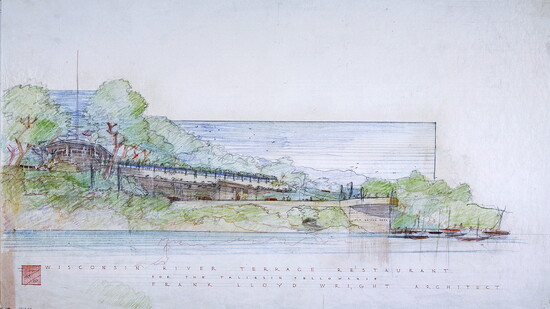
Perched along the winding curves of the Wisconsin River, a low-slung limestone structure sits embedded in the shoreline, looking less like a building dropped onto dirt and more like an outcrop pushed up by the earth itself. Designed in 1953 by Frank Lloyd Wright as a welcoming wayside for travelers and a generous gift to his neighbors, Riverview Terrace anchors the riverbank with rustic, unassuming elegance. It holds global distinction as the sole Frank Lloyd Wright-designed restaurant structure in existence today. Recently honored with an official listing on the National Register of Historic Places, the site was conceived with a clear communal intention. Wright envisioned a bustling haven where his fellowship apprentices would harvest crops from the surrounding valley acres, prepare raw ingredients in the kitchen, and serve wholesome meals to visiting guests. Constructed using buff-colored limestone quarried directly from nearby hillsides, intentional low ceilings inside give way to wide-open dining rooms with soaring ceiling lines that naturally draw people together. Decades later, that original vision of shared food and architectural beat is experiencing a sharp, thoughtful revival, reminding Madison area residents that world-class heritage sits just a short, picturesque drive down the road.
Crossing the threshold into Riverview Terrace Cafe today, you are immediately greeted by sweeping panoramic views of the water and the deliberate, focused energy of Cafe Manager Keeley Sostrom. Over the past year, Keeley has systematically overhauled the dining experience, transforming what was once a quick tourist pitstop into a standalone destination. She upgraded the beverage setup with a full espresso program using organic beans sourced from Wonder State Coffee in Viroqua, while pivoting the entire food menu toward a strict regional radius. Instead of relying on conventional deliveries, Keeley works directly with local growers. Mixed greens arrive fresh from Steadfast Acres, pasture-raised beef for custom burgers comes from Kate’s Farm, and freshly milled flours from Meadowlark supply the bakery program. Operating a farm-to-table kitchen within a shifting seasonal climate requires grit, flexibility, and a willingness to absorb higher real-time production costs. Menus shift four to five times a year to reflect whatever ingredients hit peak ripeness outside, allowing guests to experience food that nourishes without pretense. When lunch service winds down in the off-season, the space turns into an intimate venue for "Wright by Candlelight" pop-up dinners, four-course prefixed meals that sell out rapidly from autumn through spring, alongside weekend artisan workshops and corporate retreats.
Embedded deeper in the property lives the Taliesin kitchen garden, directed with fierce passion by garden lead Abbie. Stepping into the soil with Abbie feels like an immediate masterclass in regenerative permaculture and native land stewardship. Working within a compact historical footprint, Abbie eschews destructive tilling in favor of organic, no-till methods that build topsoil density and protect delicate microbial life. She manages seventy to eighty distinct produce varieties every season using vertical stacking, succession planting, and companion systems. Rather than spraying synthetic chemicals, Abbie uses native plants as what she playfully terms "bribe plants." Redroot pigweed and evening primrose are intentionally cultivated around outer beds, bribing Japanese beetles and spider mites to feast on wild foliage instead of damaging primary culinary crops. Native blooms like cutleaf coneflower (known natively as Sochan), sweet joe-pye weed, and wild bergamot fill bloom succession gaps from early spring through late autumn, providing an endless sanctuary for pollinators while safeguarding vegetables destined for the kitchen. Abbie even forages wild gooseberry and blackcap bushes from the neighboring Phoebe Point Trail, weaving native Driftless flora directly into the garden beds while hosting accessible community workshops to teach locals how edible wild plants enrich soil and health.
Beyond raw yields, Abbie approaches agriculture as a living link to regional heritage and Indigenous agricultural wisdom. The garden features traditional Three Sisters companion plots where Blue Hopi corn, Red Hidatsa dry beans, and winter squashes grow in physical symbiosis. Abbie works to incorporate heirloom seeds with deep local lineages, drawing inspiration from Indigenous culinary leaders like Chef Elena Terry of Wild Berries and Tallgrass. Terry’s ongoing efforts to recover and re-establish ancestral Ho-Chunk bean and squash varieties, seeds carried through generations of forced displacement and preserved in woven garments, inform the long-term historical care applied to Taliesin’s dirt. Every plant cultivated here holds a story that stretches far beyond simple plate presentation, honoring the original stewards who farmed these ridges long before Wright’s fellowship arrived.
The real brilliance happens where Abbie’s daily harvests cross paths with Keeley’s kitchen line. The two meet continuously to coordinate planting schedules and seasonal yields, turning potential garden surpluses into creative culinary assets. Delicate borage flowers tasting of crisp cucumber and spicy nasturtium blooms adorn daily salad plates, while wild wood sorrel provides a bright, lemony bite. When herb crops overflow, Abbie hand-harvests lemon balm, anise hyssop, Tulsi basil, and scarlet bee balm, handing them directly to Keeley, who dries and packages them in-house for a custom line of autumn tea bags. Their seamless feedback loop drastically reduces food waste, cuts the carbon footprint of every meal served, and ensures guests consume produce at maximum nutritional density. While commercial produce shipped across the country loses significant nutritional value with every day in transit, food harvested steps from the kitchen retains seventy to eighty percent of its original vitality.
Taliesin is not a stagnant museum piece preserved under glass. It is a living, breathing local homestead waiting for nearby neighbors to sit down, catch their breath, and taste the vibrant abundance growing right in our regional backyard.
You aren't just eating an ingredient. You are tasting a lineage, a landscape, and a way of life once lived.