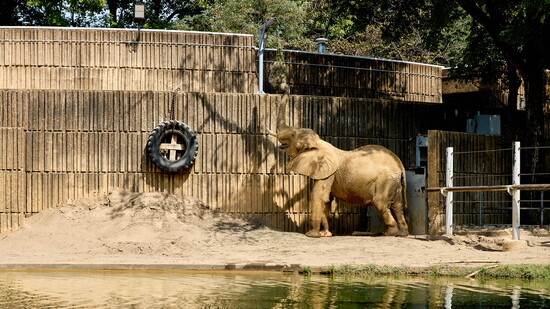
For 120 years, the Memphis Zoo has been more than a destination; it's been a Memphis rite of passage. From birthdays at the giraffe yard to school field trips and first dates, it's part of everyday life here. Today, the Zoo welcomes more than a million guests a year and reaches over 40,000 students through educational programming, all while investing in global conservation. And, as it enters its next chapter, a sweeping campus transformation is underway: one that promises new habitats, new experiences and an even bigger role for Memphis on the conservation stage. We spoke with Jessica Amacker, Public Relations and Communications Specialist for Memphis Zoo, about the numbers, the favorites and what's coming next.
What does the Zoo mean to Memphis economically?
The numbers tell a big story. More than half of our million-plus annual visitors travel over 50 miles to reach us, and our most recent economic-impact analysis found the Zoo generated roughly $89.4 million for the Memphis area in 2022. We support hundreds of jobs directly, plus countless more through hotels, restaurants and local businesses. With about 28,500 member households, it's a true hometown institution.
What's changing with the campus transformation?
We're in the middle of a long-term transformation that will eventually reimagine nearly half of our 76-acre campus. First up is Stingrays at Mangrove Cove, which broke ground in May 2026 and opens in spring 2027 - a new aquatic experience featuring stingrays, sharks and more. After that, our east end will be reimagined with more immersive habitats for elephants, giraffes and rhinos. Future phases include additional aquatic exhibits, a new penguin habitat and a refreshed farm experience.
Which animals are the biggest draws, and any hidden gems?
Our elephants, giraffes and rhinos are perennial favorites; seeing them in person offers something no photo can capture. But we'd love more visitors to explore the Herpetarium, home to dozens of reptile and amphibian species, and Animals of the Night, where nocturnal creatures are most active. Those exhibits are often overlooked, but they hold some of our most fascinating behaviors.
What conservation work might Memphians not know about?
The work here doesn't stop at our gates. Through our C6 initiatives, representing the six areas on which our conservation efforts are focused, we support projects locally and worldwide, including more than 40 years spent helping save the critically endangered Louisiana pine snake, the rarest snake species in North America, and ongoing efforts to reintroduce the dusky gopher frog along the Mississippi Gulf Coast. Our reach extends internationally too, supporting African elephants, gorillas and biodiversity efforts in Sri Lanka.
How does the Zoo make sure every Memphian can experience it, not just those who can easily afford it?
Access matters to us as much as attendance. Through the PAWS Fund, we help underserved, low-income and Title I schools cover admission and programming costs. Through Tennessee Tuesdays, any Tennessee resident can visit free with an advance reservation. Both programs share the same belief: a great zoo belongs to its whole community.
What do you want every Memphian to feel proud of?
That this Zoo was built by this city, together, over 120 years, and its impact reaches far beyond our footprint. Behind the birthday parties and field trips is an organization doing serious work in animal care, veterinary medicine, research and conservation. We're not looking backward; we're building the next chapter for the next 120 years. As our CEO, Matt Thompson, put it, “For 120 years, the Memphis Zoo has been a place where families come together and create memories that last for generations. As we look to the future, our goal is to build on that legacy, creating bigger and better experiences for our animals, more opportunities for families to connect with wildlife, and a Zoo that Memphians will be just as proud to call their own 120 years from now.”