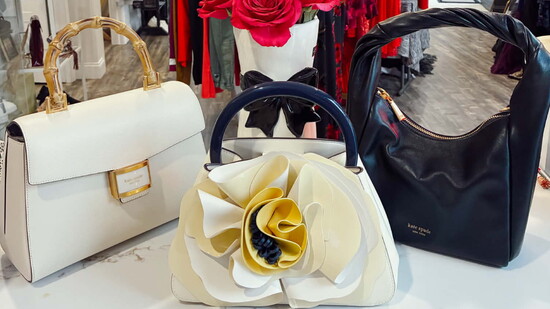
Ever since Sarah Pavia was a little girl, she's loved the thrill of the hunt—thrifting, hunting down hidden treasures, and of course, a good bargain. When she decided to share her passion for pre-loved finds on a blog as an adult, she found an audience that soon began asking if her finds were for sale. That's when she started selling online. But a shop of her own had always been the dream.
Right before her mother passed away, Pavia told her she was "going to go for her dream." And that's exactly what she did. In February 2025 she opened Second Look Styling & Boutique in Rochester's South Wedge, landing, fittingly, in what she describes as a "sustainably-driven" corner of the city.
Where it Began
Growing up in a small town with only a Kmart and a Salvation Army to buy clothes, Pavia was thrifting and hitting garage sales from a young age, and by high school, her entire wardrobe was secondhand. "I was in a lot of musicals and thrifted all the costumes for people," she says. "It's always just who I am. I'm big on recycling and being mindful of the earth."
Her dream came to fruition in stages, from that first request to sell online, to personal shopping. She went from selling items off her front porch to curating personal "thrift boxes" she'd mail out to her virtual patrons. Her home, decorated entirely with secondhand finds, was featured in a couple of magazines, and her trajectory kept evolving—eventually leading to in-person events where people could come see her treasures in person.
Keeping ‘Things Going in a Circle’
Pavia holds firm standards when it comes to her commitment to sustainable fashion. She won't carry brands that aren't secondhand or sustainably made, and brands that qualify as sustainable are labeled as such, typically repurposing fibers and other recycled materials. She also won't carry "fast fashion," the mass production of trendy clothing typically made from lower-quality synthetic fabrics.
According to Earth.org, fast fashion is the second-largest consumer of water globally and is responsible for roughly 10% of global carbon emissions. For Pavia, that's a dealbreaker. "Even if I find some of these fast fashion brands, I don't carry them in my store and never have them in my home," she says, adding, "Buying secondhand, or buying from a brand that intentionally practices ‘slow fashion,’ keeps things going in a circle."
Unlike big-box stores and fast fashion brands, where unsold clothing often ends up in landfills, Pavia donates the items she doesn't sell to local nonprofits Willow and Angels of Mercy.
Thrift vs. Consignment
Not all secondhand clothing is created equal. Thrift stores specialize in donated items and are typically run by nonprofit organizations, while consignment shops carry secondhand pieces that tend to be more fashion-forward because they’ve been curated, rather than simply collected.
Opening a consignment shop let Pavia shift her focus. Instead of scouring thrift stores herself for finds that meet her standards, she spends more time in her own store, helping people find styles that fit them. Consignment, she says, does more than keep clothes in circulation. "Consignment isn't just sustainable from a fashion standpoint, it's good for the community. People get dollars back in their pocket. The consumer is giving to another community member by buying their items.”
More Than a Fitting Room
Pavia's background in counseling often comes in handy at the shop. Many of her patrons (particularly women) come in carrying trauma, grief, postpartum changes, or just are uncomfortable in their own skin. She takes a therapeutic approach to styling, going deeper than what looks good to what also feels good. And she doesn't believe in upselling: If someone steps out of the dressing room and it's not right, she won't push it. As a certified stylist and color analyst, she'll also seek out specific pieces for clients rather than just what's on the racks.
She also prides herself on being size-inclusive, which she says is one of the more challenging parts of working in secondhand fashion. When a size is underrepresented in her inventory, she'll actively source it through partnerships with retailers. "They give me items and we mark them down, and that keeps them out of the landfill," she says.
More Than Just a Shop
Of course, her shop isn't just a shop. It's a hip event space, a party spot for groups looking for private styling, and a fun backdrop for photo shoots. Pavia also welcomes local vendors to "pop in" for weekend spotlights, and she partners with community organizations to showcase the store's fashions in local shows. Supporting other small businesses matters to her too. She carries handmade pieces from Rochester designers, including one woman who transforms vintage denim shirts into crop jackets with playful buttons that sell out within minutes. Even the mural decorating her shop window was painted by a local artist. "I try really hard to give the people who come into the store a sense of ownership," she says. "It's not just my store—it's theirs."
Helping people is at the heart of what Pavia does. Last year, a woman came into the shop hoping to start shopping secondhand. She'd recently lost weight and, in her own words, didn't have a sense of self. Pavia spent time with her, helping her find a work outfit and a birthday outfit. By the time she left, the two women embraced, because she felt that good about herself.
The woman has been a regular ever since, walking in Pavia's fashion shows and, more recently, getting signed for Rochester Fashion Week to model for other stores as well. "It was a transformative experience to watch her confidence grow," Pavia says.
Worth a Second Look
With awareness of fast fashion's impact growing, vintage is having a moment, Pavia notes. But her own commitment goes beyond any one trend. She practices what she preaches, buying secondhand from her sneakers on up.
One day, while sitting on her couch talking with someone online, she was asked why she cared so much about sustainable fashion. Her answer stuck with her: "I just wish people would take a second look and think a little differently." That conversation became the name of her store and its tagline: "You're worth a second look." For Pavia, it’s not just a tagline, it’s her way of life.