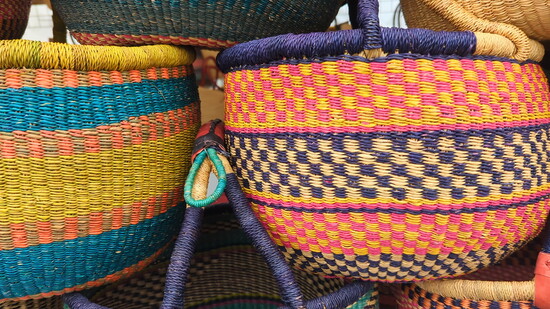
In a world where so much of what is bought feels disconnected from its origin, Zellipah Githui is building something intentional and rooted in pure tradition. As the founder of Gitzell Fair Trade, she has transformed a deeply personal journey into a global movement, one that begins with a single thread and stretches across the world.
Zellipah’s story starts in Kenya, where she learned to weave baskets long before she learned to read or write. This specialized skill was passed down from her mother, a smallholder farmer. Years later, after immigrating to the United States with less than a suitcase of handmade goods, she found herself exploring a new world while holding tightly to the traditions of home. What began as selling those items to connect with others soon revealed something bigger: an opportunity to create real income for women just like her mother.
According to Zellilpah, “When I moved to the United States in 1998 with a suitcase full of souvenirs from my family, I had a hard time settling in. With my love of community engagement, I requested the school if I could showcase my souvenirs to the students and staff. I started selling them and the idea sparked on how I could support artisans back home.”
That idea later transformed into Gitzell Fair Trade.
Today, the brand works directly with hundreds of women artisans across multiple African countries, including Kenya, Ghana, Uganda, Senegal and Rwanda.
“Everything is handmade and sourced from African makers,” says Zellipah.
The baskets, bags and home goods they create are more than beautiful objects; they are essential sources of income for these smallholder farmers and strengthen entire communities.
There is a distinct aesthetic to Gitzell Fair Trade. Zellipah says they use natural textures, sculptural forms and vibrant yet earthy tones. Thereal beauty lies within its purpose. Each piece reflects generations of craftsmanship, shaped by tradition and refined by hand. No piece is rushed. Nothing is mass-produced. Instead, the brand embraces a slower, more meaningful approach to design and one that values the maker as much as the finished product.
That philosophy extends beyond the product itself. As a proud member of the Fair Trade Federation, Zellipah says the company is committed to ethical sourcing, transparency and long-term partnerships that prioritize dignity and fair wages. It’s a model that challenges the conventional supply chain, proving that business can be both profitable and deeply human.
At the center of it all is Zellipah, whose background and experience informs every decision she makes. But perhaps her greatest strength is her ability to connect to people, to their stories and to the broader impact of the work she does so well. She doesn’t just sell goods. She creates a bridge between two very different parts of the world.
In an era increasingly defined by the next TikTok trend, Gitzell Fair Trade offers a compelling reminder: what we bring into our homes can carry meaning far beyond aesthetics. It can empower others and tell an important story.
Zellipah says they do custom orders, special orders. "From product development to handoff, I involve customers all the way. We offer tours and team-building activities at our warehouse. Clients are also welcome to visit the makers in Africa as well.”
Thanks to Zellipah, that story of connectivity is still being told through one African basket or woven purse at a time.