In a housing market where homeowners are staying put longer and scrutinizing every dollar spent on renovations, cabinetry has emerged as one of the most consequential investments in a home.
“Cabinetry is typically the largest line item in a kitchen remodel,” said Adam Johnston, founder and CEO of UB Kitchens. “You’re talking anywhere from $30,000 to $100,000. So the real question becomes: what are you getting for that?”
After completing nearly 4,000 kitchens in Austin since 2008, Johnston has seen firsthand how homeowners often underestimate the long-term impact of their cabinet choices. While finishes and colors draw immediate attention, construction quality, warranty backing, and installation standards determine how that investment performs over time.
“There’s a perception that all cabinetry is equal, and it’s not,” Johnston said. “Where are the cabinets made? What materials are being used? What’s the warranty — and who stands behind it?”
Those questions matter more in today’s market. With higher interest rates and many homeowners locked into favorable mortgages, remodeling has replaced moving. Kitchens and primary bathrooms remain the rooms most likely to influence resale value, but buyers have become more discerning.
With 24 years of industry experience under his belt, lead designer Craig Kamdar said the difference often lies beneath the surface.
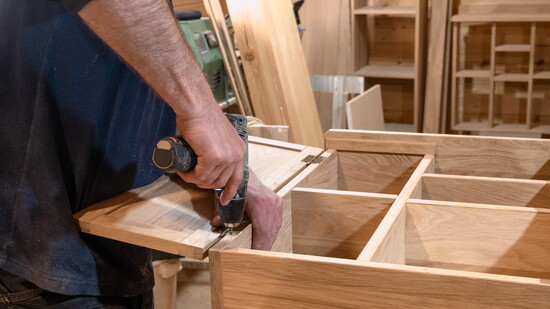
“Box construction is huge,” Kamdar said. “Three-quarter-inch plywood versus particle board, quality drawer boxes, higher-grade materials — those things affect longevity.”
Finish is another differentiator. Large manufacturers apply paint and stain in controlled environments with industrial finish lines that heat-bake coatings into the wood. Site-finished cabinetry, sprayed inside a home or small shop, cannot replicate that consistency, Johnston said.
While lower-cost imports may appear comparable on day one, performance gaps tend to emerge years later. Peeling finishes, shifting construction, and hardware failures often surface after warranties expire.
UB Kitchens carries brands that offer lifetime warranties, allowing homeowners to call years later for replacement hinges or doors at no cost. That back-end service, Johnston argues, is part of the investment equation.
“It’s not just the physical cabinet,” he said. “It’s the expertise, the installation, and knowing you can call someone 10 years from now.”
Installation can also influence long-term value. Rather than subcontracting by the piece, UB Kitchens employs full-time installers paid hourly, allowing for greater attention to detail and problem-solving in homes, where no wall is perfectly straight.
Design ultimately anchors the return.
“Great design trumps everything,” Johnston said. “It’s not always about how much you spend. It’s about balance, proportion, and how the space feels.”
Frameless European-style cabinetry, for example, offers tighter reveals and up to 20% more usable interior space, Kamdar said. Drawers, rollouts, and aging-in-place features such as pull-down shelving and accessible sinks extend usability well beyond aesthetics.
As homeowners think long-term, whether planning to age in place or eventually sell, cabinetry straddles both worlds.
“It’s cosmetic and infrastructure,” Johnston said. “It has to look beautiful. But it also has to function every single day.”
For homeowners weighing where to allocate renovation dollars, cabinetry sits at the intersection of design and durability. Done thoughtfully, it doesn’t just photograph well — it holds up, performs, and quietly supports daily life long after trends fade.