For all our fascination with longevity, the secrets of the world's longest-lived people are surprisingly ordinary. They move. They eat mostly whole foods. They maintain close relationships and purpose. Rather than wellness squeezed into an hour, these habits are built into everyday life.
These communities are known as Blue Zones—places including Okinawa, Japan; Sardinia, Italy; and Ikaria, Greece, where reaching 100 is unremarkable. To translate those lessons closer to home, we turned to Zechariah Cesani, founder of The Ave Luxe Gym in Lake Park—"The Ave," to its devotees—and Audrey Vero, registered dietitian nutritionist and founder of Vero Vitality, The Ave's nutrition partner.
"Longevity isn't about just adding years, but rather maintaining the capacity to enjoy those years," Cesani says. For him, that starts with strength—not just muscle, but the balance and mobility to keep traveling, chasing grandkids and pursuing hobbies. "Building strength is your roadmap to staying independent."
It doesn't mean living in the gym, though. In Okinawa, movement is woven into the day: walking, gardening, staying active without calling it exercise. Cesani preaches the same gospel—strength training matters, but so does everything between workouts: golfing, biking, swimming, pickleball. Palm Beach gives us few excuses. Walk the Lake Trail. Swim. Garden.
And the message, Cesani insists, is that it's never too late to start. Healthcare tends to wait for something to break; he'd rather get ahead of it. "Proactive health essentially just means not waiting for a wake-up call to do something about it," he says. At The Ave, that begins with a Client Needs Assessment—hearing someone's story, then medical history, then a goal—before any workout is prescribed. Each step earns something: the story shows what a person values, the history builds trust, and pairing them with the right specialist raises the odds they'll actually follow through.
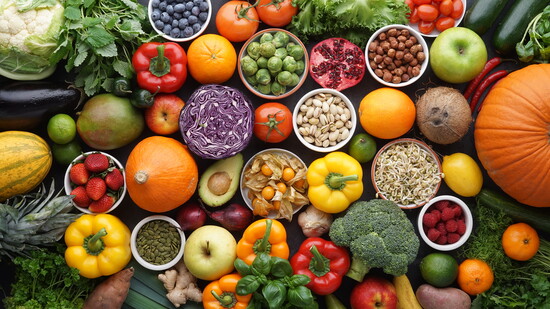
The same philosophy carries into the kitchen. One misconception about Blue Zones, Vero says, is that residents eat vegan. They don't—Okinawans eat pork, Sardinians eat fish, Ikarians eat goat and lamb. Plant-forward is more accurate: vegetables, fruits, beans, lentils, nuts, seeds and whole-food carbs, balanced with enough protein to preserve muscle as we age. "Variety really is king when it comes to diet," she says.
Carbs aren't the enemy, either. Okinawan sweet potatoes and rice are cooked and cooled into resistant starches, eaten alongside fiber, lowering their glycemic impact—nothing like a slice of white bread.
Blue Zones offer just as important a lesson in how we eat. Okinawa has hara hachi bu, stopping at roughly 80 percent full—a far cry from clearing the plate and reaching for dessert. Meals unfold slowly, with family.
Because food and exercise aren't the whole story. Vero points to research suggesting loneliness may be as damaging as smoking. In Okinawa, that closeness borders on group cohesion—neighbors notice when someone goes quiet and check in unprompted, the culture built around the group as much as the individual. Close-knit community runs through every Blue Zone, and Palm Beach may already have a head start—this is a place that takes lunch seriously, its calendar filled with dinners, clubs and golf games. Even the region's famous relationship with wine may say less about the glass than the table around it. "I don't think it's so much the alcohol that's adding to our health," Vero says. "It's more so that it brings you into that social situation."
And if this has you plotting a Monday-morning overhaul, don't. Vero's advice: resist perfection, add rather than subtract. "Focus on what can I bring in to try to crowd out the bad stuff," she says.
Perhaps that's the real secret: no miraculous food, workout or hack, just ordinary behaviors practiced over a lifetime. Move. Stay strong. Eat well. Take your time. Find your people. Not to live forever—to keep living well.
HOW TO LIVE TO 100
No promises, but the centenarians may be onto something.
Move: Walk, garden, swim—just keep moving.
Strengthen: Protect muscle, balance and mobility.
Eat: Think plants, protein and variety.
Pause: Stop eating before you’re stuffed.
Connect: Make time for friends, family and community.